Imago Relationship Therapy

Stop Expecting Mind-Reading: How to Ask for What You Need in Love

By: Gregory E. Koch, Psy.D.

Couple sitting together in conversation

— — —

There is something we do in relationships that breaks my heart every single time I see it.

We fall in love with someone — this beautiful, complicated, wonderfully specific human being — and then we wait. We wait for them to know. We wait for them to notice. We wait for them to simply get it, the way a person gets it in the movies, the way the hero always seems to know exactly what the heroine needs without being told.

And when they don't know? When they miss it entirely — when they bring us the wrong flowers, or miss the anniversary moment, or scroll their phone while we sit quietly aching for connection — we don't ask. We don't explain. We do something else instead.

We decide that the missing is proof.

Proof that they don't really love us. That they never truly understood us. That maybe, just maybe, we chose wrong.

I've sat with so many couples in this exact place. Two people, drowning in a silence of their own making, each one absolutely certain that if their partner really loved them, they would already know what to do.

Let me tell you something. This belief — as romantic as it feels, as deep and soulful as it sounds — is one of the most relationship-destroying ideas in our culture. And in my work as an Imago Relationship Therapist, I see its damage every single week.

It has a name.

— — —

The Romantic Fallacy: "If You Loved Me, You Would Just Know"

It goes like this: If you truly loved me, you would know what I want and give it to me without my having to ask.

I understand the appeal of this idea. I do. There's something gorgeous about the thought that real love means perfect attunement — that two souls might be so beautifully matched that words become unnecessary, that your beloved simply feels what you need and provides it like magic.

It's the stuff of poetry. Of novels. Of the kind of love songs that make you cry in your car.

But here is the truth, plain and simple: You cannot get what you want without asking for it.

That is not a failure of love. That is the nature of being two separate human beings.

In Imago Relationship Therapy — the approach developed by Harville Hendrix, Ph.D., and Helen LaKelly Hunt, Ph.D., and the framework I use in my practice — we talk a great deal about how each of us comes into our relationships carrying a deep, unconscious image called the Imago. This is a kind of internal blueprint, built from our earliest experiences with the people who raised us. It holds every unmet need, every wound, every moment of longing from our childhoods.

Our partners are not born knowing our Imago. They could not possibly be. They have their own blueprint, their own history, their own invisible map of needs and wounds and hopes. When we expect them to read our minds, we are asking them to navigate a country they have never visited, using a map they have never seen, and then blaming them for getting lost.

This is not love. This is an impossible test disguised as intimacy.

The Romantic Fallacy might be the loneliest way there is to live inside a relationship. You sit there, full of needs, full of longing, waiting to be found — and your partner, across the table or across the bed, has no idea they are even supposed to be looking.

— — —

Why Asking for What You Need Is the Most Loving Thing You Can Do

Here is the other side of that truth — the part that actually gives me hope:

The moment you decide to ask — clearly, kindly, specifically — you step out of the fantasy and into something far more powerful. You step into real love. Conscious love. The kind of love that chooses, over and over, to show up for another person on purpose.

You cannot get what you want without asking for it. But the beautiful flip side is this: when you ask, you give your partner the gift of actually being able to love you well.

Think about that for a moment. When you hold your needs secret, locked away behind the expectation that your partner should already know, you are stealing from them. You are taking away their chance to come through for you. You are setting them up to fail a test they didn't know they were taking.

Asking is not weakness. Asking is not unromantic. Asking, done with courage and tenderness, is one of the most loving acts available to us.

— — —

How Criticism Shuts Down Relationship Communication

Now. There is another way we try to communicate our needs, and it is far more common than asking, and far more destructive.

We criticize.

We say things like: You never pay attention to me. You always make everything about yourself. Why can't you just be present for once?

And here is what I need you to understand about what happens in that moment — not emotionally, but biologically, physically, in the actual nervous system of the person you love.

When you level criticism at your partner, their body responds the way a body responds to danger. The brain's alarm system fires up. The fight-or-flight response kicks in — that ancient, animal reaction that was designed to help our ancestors run from predators. Suddenly, the person across from you is no longer the person who loves you. They are, in the language of their nervous system, under attack.

And here is what nobody tells you about people who are under attack: they cannot change.

Not because they don't want to. Not because they don't care about you. But because the part of the brain that is in charge of growth, of flexibility, of choosing new behaviors and rising to meet your needs — that part goes offline the moment the alarm sounds. When your partner is flooded with defensiveness, they are operating from the reactive, survival-oriented part of themselves. They are frozen there, like a deer in headlights, braced for the next blow.

You have not inspired change. You have created a wall.

This is what Imago Relationship Therapy means when we say that criticism freezes behavior. You point your finger, and your partner hardens right there, in the very pattern you are most frustrated by — because their entire system is now organized around protecting themselves from you, rather than growing toward you.

Criticism kills love. Not all at once. Slowly, one reactive conversation at a time, until two people who once adored each other are armored strangers sharing a home.

— — —

A Real Couples Communication Story: José and Me

I want to tell you about something that happened between my partner José and me — because I think it illustrates all of this more clearly than any couples therapy theory ever could.

José came to me one evening, lit up with excitement. He had been thinking about applying for a new job — something that felt like a real step forward for him, a door opening onto a bigger life.

And what did I do?

I did what I always do when I feel uncertain or scared. I got intellectual. I started asking questions. Rapid-fire, logical, well-meaning questions. Have you researched the company? What does the benefits package look like? Is this the right time? What's the plan if it doesn't work out?

I thought I was being helpful. I thought I was being thorough. I thought, in some part of myself I wasn't fully examining, that this was what love looked like — careful thinking, practical planning, covering all the bases.

But here is what was happening to José in real time, while I was busy being so very reasonable:

His nervous system was going quiet. His excitement — that bright, alive, reaching-toward-something energy — was slowly shutting down. With every question I asked, he pulled back a little further. By the end of the conversation, the light was gone from his eyes.

He didn't apply for the job.

Not because he decided against it on his own terms. But because my response had, without my ever intending it, sent him a message that landed somewhere deep: This is too hard. This is not safe. Pull back.

I had frozen him in place — not with cruelty, but with something that looked, on the surface, like care.

— — —

How the Imago Intentional Dialogue Changed Everything

This is where the work began.

José and I sat down together and used the Imago Intentional Dialogue — a structured couples communication process that is central to Imago Relationship Therapy. In this dialogue, one person speaks from their own experience, and the other person's entire job is to listen. Not to defend, not to explain, not to problem-solve. Just to hear, to mirror back, and to try to understand.

José was the sender. I was the receiver.

And what he said — carefully, bravely, specifically — changed something in me.

"When I bring up a topic like this, would you please be encouraging of my actions? What that would look like is..."

And then he painted the picture. He told me, in clear and loving detail, what encouragement actually looked like in his world — the tone, the energy, the kinds of words that would make him feel like I was with him rather than evaluating him. He gave me the movie to play in my head.

I could see it. I could see exactly what he was asking for.

And sitting there, actually listening — not defending, not explaining why my questions came from love, not making it about my intentions — I could finally see what my behavior had looked like from inside his experience. I could feel how my intellectualizing, however well-meant, had landed on him like a series of small doors closing.

I hadn't meant to shut him down. But I had. And once I could see that clearly, the answer was easy.

I said yes.

— — —

The "Movie in Your Head" Test: How to Make a Request That Actually Lands

Here is the key to effective communication in relationships — the test I use with every couple I work with:

Your partner should be able to see the movie in their head.

When you make a request, it needs to be so clear, so specific, so vivid that your partner can close their eyes and picture exactly what you are asking for. Not a vague gesture toward something better. Not an abstract wish. An actual, concrete, observable behavior.

If I say, "I want you to be more supportive" — what do you see? Nothing clear. Just a foggy feeling. "Supportive" means something different to every person who has ever lived.

But if I say, "When I come to you with a new idea I'm excited about, would you start by saying something encouraging — even just 'I love that you're thinking big' — before we get into the practical questions?" — now you can see it. You can hear the words. The movie plays in your head. You know exactly what is being asked.

That specificity is not cold or clinical. It is a kindness. It is a road map drawn by someone who wants the journey to succeed.

— — —

What to Do When the Answer Is "No"

Now here is the part that I think is the most radical idea in all of this.

When you make a request — a real, clear, lovingly obvious request — the answer can be yes or no.

Let that land.

Your partner gets to say no.

I know. It feels scary to build up the courage to ask for what you need and then hear that it might not be given. But stay with me here, because this is where it gets beautiful.

When someone says yes to a request they freely could have refused, that yes means something. It is not the automatic, sleepwalking response of someone trying to avoid conflict. It is a conscious act of love. A choice made with open eyes. A gift, freely given.

And when the answer is no — when your partner truly cannot give you what you are asking for right now — there is a way to say it that keeps love intact.

It sounds like this:

"It makes sense that you want that. And I want you to have it. But I can't give you that right now. I hope you will ask me again."

Read those words again. Slowly.

There is no rejection there. There is no dismissal. There is no you're wrong for wanting this buried in the subtext. There is only honesty, and tenderness, and an open door. The relationship is not damaged. The asking is not punished. The wanting is honored, even when the timing is off.

This is what conscious love actually looks like. Not two people who never disappoint each other. But two people who have agreed to be honest about what they can and cannot give — and to hold each other's needs with care, even when they cannot fully meet them in this moment.

— — —

A couple holds a paper heart

How to Make a Lovingly Obvious Request: A Step-by-Step Guide

So what does healthy communication in relationships actually look like, in practice? Here are the elements that make a request truly land:

  1. Make it positive. Ask for what you do want, not what you want your partner to stop doing.

Instead of: "Stop shutting me down when I'm excited about something."

Try: "When I bring up something I'm excited about, would you meet me there with encouragement first?"

  1. Make it specific. Your partner should be able to see the exact behavior you're imagining. If it's too vague to picture, it's too vague to deliver. Give them the movie.

  2. Make it time-limited. Give your request a frame — 'this week' or 'when I bring up something new.' It makes the ask feel achievable rather than overwhelming.

  3. Make it kind. You are not filing a complaint. You are extending an invitation. The tone of a request is as important as the content.

  4. Be willing to hear no. A freely given yes is worth a thousand reluctant ones. Trust your partner to be honest with you, and trust that honesty as a form of respect.

— — —

Frequently Asked Questions About Communication in Couples Therapy

What is Imago Relationship Therapy?

Imago Relationship Therapy is an evidence-based approach to couples counseling developed by Harville Hendrix, Ph.D., and Helen LaKelly Hunt, Ph.D. It uses structured dialogue techniques to help partners communicate more deeply, understand each other's emotional histories, and turn conflict into connection.

What is a Behavior Change Request in Imago therapy?

A Behavior Change Request is a specific Imago technique where one partner turns a frustration or criticism into a clear, positive, actionable request. The goal is to describe a desired behavior so specifically that the other partner can picture it — and choose to say yes or no freely.

How do I stop criticism from hurting my relationship?

In Imago therapy, we transform criticisms into requests. Instead of pointing at what's wrong, you describe what you want. This keeps your partner's nervous system calm and open to change, rather than defensive and shut down.

How do I ask for what I need without starting a fight?

Use the Imago Intentional Dialogue structure: speak from your own experience, make your request specific and positive, and give your partner the choice to say yes or no — without pressure or criticism.

What if my partner says no to my request?

A loving "no" is still a form of respect. The Imago response to "no" sounds like: "It makes sense that you want that. I want you to have it. But I can't give that right now — I hope you'll ask me again." The wanting is honored, even when the timing is off.

— — —

The Deeper Truth About Relationship Communication

Here is what I have seen, over and over — in my practice and in my own relationship:

The moment we stop waiting to be understood and start asking to be understood, something shifts. The resentment softens. The walls come down just a little. Because now, instead of two people silently keeping score of who has failed whom, you have two people actually talking — one brave enough to name what they need, and one being given a real chance to come through.

José didn't need me to stop caring. He needed me to show my caring differently — in the language that actually reached him, rather than the language that was most familiar to me.

That is the ongoing invitation of a conscious relationship. Not to stop being who you are, but to keep learning how to reach across the space between two separate selves — and to ask, clearly and lovingly, for what you need to feel met there.

The Romantic Fallacy promises you a love that reads your mind. But what it actually delivers is loneliness dressed up in poetry.

The real thing — the conscious, deliberate, eyes-wide-open love that Imago Relationship Therapy points us toward — asks something harder of us. It asks us to know ourselves well enough to say what we need. To trust our partner enough to say it out loud. And to be brave enough to hear whatever honest answer comes back.

You can't get what you want without asking for it.

But when you ask — clearly, lovingly, specifically — you give your relationship the one thing it needs most:

A real chance.

— — —

This article draws on the principles of Imago Relationship Therapy, developed by Harville Hendrix, Ph.D., and Helen LaKelly Hunt, Ph.D. To learn more, consider reading their bestselling book Getting the Love You Want, attend the Getting the Love You Want weekend workshop for couples, or reach out to schedule a couples therapy session with a certified Imago therapist.

Ready to start communicating more clearly with your partner? Book the couples workshop or a couples therapy consultation today.

When Turtles and Octopuses Learn to Dance: Healing the Pursue-Withdraw Cycle

By: Gregory E. Koch, Psy.D.

A cartoon turtle and octopus dance underwater

“AI Turtle Octopus Dance” © 2025 Gregory E. Koch

Over the past two weeks, we've explored the world of turtles (minimizers) and octopuses (maximizers), as well as what happens when two turtles find each other. But what about the most common pairing we see in relationships—when a turtle and an octopus fall in love?

This is the classic "opposites attract" dynamic that creates both the most passionate connections and the most frustrating conflicts. If you've ever felt caught in an endless cycle where one partner pursues while the other withdraws, you're experiencing one of the most common relationship patterns in the world. The good news? It's also one of the most healable.

Why Turtles and Octopuses Fall Hard for Each Other

In the beginning, turtle-octopus couples feel like they've found their missing piece. The turtle admires the octopus's emotional warmth, spontaneity, and ability to express feelings so freely. The octopus is drawn to the turtle's calm strength, steady presence, and mysterious depth.

What the turtle loves about the octopus:

  • Their emotional expressiveness feels alive and exciting

  • They bring warmth and energy to the turtle's sometimes quiet world

  • They're willing to take emotional risks the turtle finds scary but admirable

  • They help the turtle feel less alone in their inner world

What the octopus loves about the turtle:

  • Their calm presence feels soothing and grounding

  • They provide stability when the octopus's emotions feel chaotic

  • Their thoughtfulness and depth feel mature and wise

  • They offer the security the octopus has always craved

This complementary attraction makes perfect sense from an Imago perspective. As Dr. Harville Hendrix and Dr. Helen LaKelly Hunt discovered, we unconsciously choose partners who can help us heal our childhood wounds—and who challenge us to grow in areas where we're underdeveloped.

When the Dance Becomes a Battle

But once real life sets in, these same differences become sources of conflict. The pursue-withdraw cycle begins, and it can feel like being trapped in a painful dance where both partners are constantly stepping on each other's feet.

Here's how it typically unfolds:

Comic strip showing a pursue-withdraw conflict between an octopus partner and a turtle partner

“AI Turtle Octopus Conflict Cartoon” © 2025 Gregory E. Koch

And round and round they go, with each partner's protective strategy triggering the other's deepest fear.

The Unconscious Messages Driving the Dance

Every turtle carries an unconscious message from childhood: "I survived by being self-sufficient. If I retreat into my shell and maintain my boundaries, I'll be safe from overwhelming emotions and demands."

Every octopus carries their own unconscious message: "I survived by working hard for attention and love. If I express my emotions with energy and pursue connection, I'll finally get the care I need."

Both strategies worked in childhood, but in adult relationships, they create a painful cycle where each partner's solution becomes the other's problem.

Understanding the Childhood Wounds

Turtles often grew up learning:

  • Big emotions were dangerous or overwhelming

  • Independence was safer than dependence

  • Withdrawing protected them from criticism or intrusion

  • Their caregivers were emotionally unavailable or inconsistent

Octopuses often experienced:

  • They had to work hard to get their emotional needs met

  • Expressing feelings was the way to get attention

  • Withdrawal from others felt like abandonment

  • Their caregivers were sometimes loving, sometimes distant

Neither partner is wrong—both learned intelligent survival strategies. The problem is that these strategies now trigger each other's deepest childhood fears.

The Hidden Gift in Your Differences

Here's the beautiful truth that Imago therapy reveals: your partner's "annoying" traits are actually invitations to heal and grow. The octopus's pursuit isn't really about control—it's about their deep longing for connection and security. The turtle's withdrawal isn't really about rejection—it's about their need for safety and space to process.

Your partner didn't choose their coping style to hurt you. They developed it to survive. And somehow, your unconscious mind knew that this person—with their particular way of being in the world—was exactly who you needed to help you become more whole.

The octopus helps the turtle learn to:

  • Express emotions more freely

  • Stay present during difficult conversations

  • Risk vulnerability for the sake of connection

  • Value relationship as much as independence

The turtle helps the octopus learn to:

  • Self-soothe instead of always seeking external comfort

  • Contain emotions without losing their authenticity

  • Trust that space doesn't mean abandonment

  • Find security within themselves

Breaking the Cycle: The Path to Conscious Partnership

Moving from this painful dance to a healing partnership requires both people to understand what's really happening underneath the surface behaviors.

For the octopus, growth means:

  • Learning to self-soothe when anxiety arises instead of immediately pursuing

  • Understanding that your partner's withdrawal isn't about you—it's their way of managing overwhelm

  • Practicing asking for connection in ways that feel safe to your turtle partner

  • Containing your emotions enough to have productive conversations

For the turtle, growth means:

  • Learning to stay emotionally present even when you feel pressured

  • Understanding that your partner's pursuit comes from love and fear, not attack

  • Practicing expressing feelings before you're completely ready

  • Taking the initiative to offer connection instead of waiting to be pursued

Tools for the Turtle-Octopus Dance

The Getting the Love You Want workshop offers specific tools that work beautifully for turtle-octopus couples:

The Imago Dialogue provides structure that helps both partners feel safe. The octopus gets to be heard without overwhelming the turtle, and the turtle gets time to process without feeling pressured to respond immediately.

Scheduled relationship talks help turtles know when emotional conversations will happen (reducing their anxiety) while ensuring octopuses get the connection they need.

Graduated intimacy exercises help turtles practice vulnerability in manageable doses while helping octopuses learn to contain their emotional intensity.

Understanding your triggers helps both partners recognize when they're reacting from childhood wounds versus responding to present reality.

The Beautiful Outcome: Conscious Love

When turtle-octopus couples learn to dance together consciously, something magical happens. The turtle learns to come out of their shell more often, discovering that vulnerability can actually feel good when it's received with love. The octopus learns to trust that their partner's need for space isn't abandonment, finding security in the turtle's consistent, quiet love.

Instead of triggering each other's wounds, they begin healing each other's hearts. The relationship becomes a place where both people can be fully themselves while also growing beyond their childhood limitations.

The healed turtle-octopus couple looks like:

  • A turtle who can express emotions freely, knowing they'll be received with love

  • An octopus who feels secure in their partner's love, even during quiet moments

  • Two people who can ask for what they need without fear of rejection or overwhelm

  • Partners who see conflict as an opportunity to understand each other better

  • A relationship where differences become sources of growth rather than frustration

Hope for Your Relationship

If you recognize yourself in this pursue-withdraw dance, please know that you're not broken, and neither is your relationship. You're experiencing one of the most common—and most healable—relationship dynamics in the world.

The very traits that drive you crazy about your partner are the ones that can help you become more complete. Your octopus partner's emotional intensity is teaching you to feel more deeply. Your turtle partner's need for space is teaching you to find security within yourself.

With the right tools, understanding, and commitment to growth, your differences can become your greatest strengths. The pursue-withdraw cycle can transform into a beautiful dance of connection and autonomy, intimacy and independence.

Ready to Transform Your Dance?

Consider attending a Getting the Love You Want workshop or book a couples therapy consultation, where turtle-octopus couples learn practical tools for transforming their painful patterns into healing partnerships. Imago Relationship Therapy, created by Dr. Harville Hendrix and Dr. Helen LaKelly Hunt, has helped millions of couples over four decades discover that their greatest relationship challenges are actually their greatest opportunities for growth and healing.

Your unconscious mind chose your partner wisely. Now it's time to learn how to love them—and yourself—consciously.

Next week, we'll explore what happens when life throws curveballs at turtle-octopus couples, and how to maintain your conscious partnership during times of stress, change, and challenge.

Octopus and turtle swimming together — symbol of a healed couple connection

“AI Octopus and Turtle Swim Together” © 2025 Gregory E. Koch

Navigating Relationship Pressures: How Imago Relationship Therapy Empowers LGBTQ+ and Diverse Couples

By: Gregory E. Koch, Psy.D. | September 9, 2024

As a psychologist and certified Imago Relationship Therapist, I’ve dedicated my career to helping individuals and couples navigate the complexities of love and partnership. But my journey isn’t just professional—it’s also deeply personal. My husband, José, and I are not only a gay couple, we are also interethnic. We have personally experienced the unique challenges that come with being a diverse couple in today’s world. The societal expectations, family pressures, and occasional misunderstandings have tested our bond. Through it all, we have found strength and growth by utilizing the tools provided in Imago Relationship Therapy (IRT). The principles of IRT provide us with a safe space to explore our differences, celebrate our love, and build a resilient partnership. Our experience has not only enriched our personal lives, it has deepened our commitment to helping other couples, especially those from the LGBTQ+ community and diverse backgrounds, find their path to lasting love and understanding.


Modern day couples face a myriad of expectations and challenges. For LGBTQ+ couples, these pressures are often compounded by societal stigma, discrimination, and unique family dynamics. Multicultural couples may struggle with navigating cultural differences and addressing prejudices. It is important to acknowledge that all couples, including LGBTQ+ and diverse couples, must contend with the usual relationship stressors, such as communication issues, work-life balance, and financial concerns.


José and I are excited to offer the Getting the Love You Want couples workshop, based on Imago Relationship Therapy, which offers valuable tools to help couples cope with relationship pressures and strengthen their bond.


The couples workshop is not group therapy. Rather, it is a weekend where José and I provide education about what drives couples to conflict, demonstrate skills that help couples successfully improve their connection, and allow time for couples to practice these skills in private.


The Getting Your Love Want couples workshop can help your relationship in the following ways:


1. Increase compassion and curiosity: The workshop encourages partners to approach each other with genuine interest, kindness, and empathy. By learning to see their partner’s perspective, couples can better understand and validate each other’s experiences, including the unique challenges faced by LGBTQ+ and diverse couples.


2. Improve communication: Learning effective communication tools is crucial for navigating relationship challenges. The workshop teaches couples how to listen actively and express themselves without using shame, blame, or criticism, to foster better understanding and a safe space for connection.


3. Address cultural differences: The workshop provides a safe space for intercultural and interethnic couples to explore and celebrate their diverse backgrounds. The tools offered will help partners negotiate cultural differences and find common ground.


4. Heal past wounds: The Imago approach recognizes that childhood experiences shape our adult relationships. The workshop teaches couples how to identify and heal past wounds and traumas, to reduce their impact on their romantic relationship.


5. Build a unique relationship identity: Creating relationship models can be challenging for LGBTQ+ and diverse couples. This workshop supports couples in developing a unique identity that honors both partners backgrounds and values.


6. Develop practical skills: Couples will leave the workshop with a practical toolkit that they can use at home to continue their growth. These include structured dialogues, exercises for deepening intimacy, and conflict resolution strategies. This practical toolkit empowers couples to navigate conflict and face their relationship challenges with confidence and understanding - ready and equipped to handle any obstacles that they might encounter.


7. Foster resilience: Couples will strengthen their connection and improve their communication to more effectively tackle external pressures and challenges. By enhancing their ability to support and understand each other, couples can build a strong foundation for navigating difficult situations and strengthening their bond.


The Getting the Love You Want couples workshop provides a supportive environment for couples to explore their relationship dynamics, free from judgment or societal expectations. While all couples are welcome, it’s particularly valuable for LGBTQ+ and diverse couples who may not see their experiences reflected in the larger society. Our goal is to create a safe, comfortable space for you to grow and learn.


As couples work through the exercises and discussions, they often experience a renewed sense of connection and understanding. They learn that conflict is not an obstacle but an opportunity for growth and deeper intimacy. This shift in perspective can bring hope and optimism to couples, showing them that their relationship can continue to grow and strengthen with commitment and practice, building a resilient partnership capable of weathering life’s challenges.


I’ve seen countless couples transform their relationships through the Imago process, and José and I have seen the benefits in our own relationship. By increasing compassion, fostering curiosity, and developing practical skills, couples can cope with societal pressures and thrive despite them.


We invite you to attend an upcoming Getting the Love You Want couples weekend workshop. Contact us for more information and to register. Imago Relationship couples therapy and couples intensives are also available. José and I look forward to meeting you soon.


About the author: Dr. Gregory E. Koch has over 20 years of experience helping individuals and couples achieve personal growth and meaningful connections. He is a licensed clinical psychologist and Certified Imago Relationship Therapist. Dr. Koch specializes in trauma recovery, LGBTQ+ support, and relationship counseling. Dr. Koch and his husband, José Ontiveros Koch, present a couple’s weekend workshop called “Getting the Love You Want.” Learn more about Dr. Gregory E. Koch


Getting The Love You Want Educational Workshop: What We Learned as a Couple

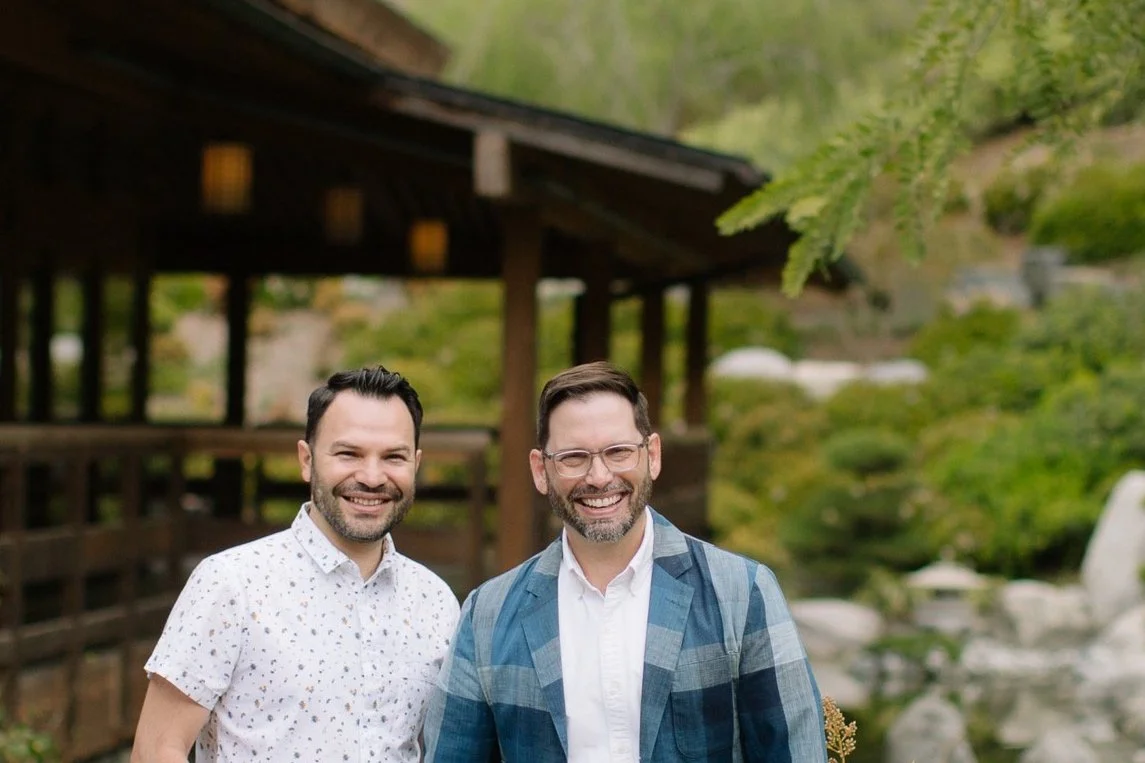
Dr Greg Koch and husband, Jose, smile while in the Japanese Friendship Garden

Written by Dr. Koch and José Ontiveros Koch

My husband, José, and I are completing professional training to facilitate the Imago-based ‘Getting the Love You Want’ Couples Workshop. This educational program is an immersive two-and-a-half-day experience on enhancing communication and building intimacy. We are excited to announce that the first workshop will be offered at Therapy Changes in June 2024! In the lead-up to our first workshop, we wanted to share a few things we learned from attending the workshop ourselves six years ago. These lessons have helped our relationship immensely and we are still practicing the skills today.  

Lessons learned:

  1. The workshop introduced us to Imago Couples therapy techniques for a new way to talk and listen. We learned the skills necessary to actively listen to each other. For example, we learned how to use the 'mirroring' technique, which is when one person repeats back what the other person said. This helped ensure that we truly understood each other's perspectives before moving forward in the conversation. Mastering this technique has been a game-changer in our relationship. We now have a deeper understanding and empathy for one another.

  2. We learned how differences in our upbringing impact our communication styles. Once we recognized how our backgrounds and experiences influence our communication styles, it opened our eyes to the different ways we perceive problems and how we communicate. This awareness helped us better navigate these differences in our relationship.

  3. José experienced a great deal of personal growth during the workshop experience. He learned valuable skills to shift away from a reactive mind to asking for what he needs. As a couple we gained strategies to move away from reacting unconsciously to each other and towards expressing our thoughts and feelings openly by asking for what we need. This shift fostered support, empathy, and understanding in our relationship.

  4. I was captivated by the concept of staying curious. The workshop underscored the significance of maintaining a sense of curiosity about each other. This perspective fostered an ongoing learning and understanding within our relationship that continues today. When we remain curious toward one another, we reduce assumptions that we have about the motivation behind each other’s behavior and remain open to learning something new about our partner that we didn’t know before.

The Getting the Love You Want workshop is a great opportunity for any couple to learn more about each other, and themselves in a safe environment. The workshop is educational; it is not therapy. This means the amount that you share with others is entirely up to you. This experience will teach you how to break destructive patterns of communicating and build new pathways for increased understanding, compassion, and closeness with your partner. Ample opportunities to practice new behaviors will be provided, with professional guidance from the group facilitators. You and your partner may be surprised at what is possible when you listen – really listen – to each other. Together you will work toward a common vision of your dream relationship.

We invite you to join us at our upcoming Getting the Love You Want Couples Workshop this June. Contact Us today for more information and to register. José and I look forward to meeting you soon!